Posts tagged ‘Health Care Reform’
What’s The Benefit of De-Funding Health Care Reform?
The House of Representatives will vote today on an amendment to the 2011 Continuing Budget Resolution that would prevent all spending to implement the Affordable Care Act, the health reform law enacted almost one year ago. “This amendment is not in the interest of Medicare, the current fiscal crisis, or families,” says Judith Stein, executive director of the Center for Medicare Advocacy. “Defunding health care reform would endanger children who have pre-existing conditions, deprive uninsured young adults from coverage under their parents’ plans, limit Medicare coverage for preventive services, and end important consumer protections for Americans of all ages.” The amendment to defund health care reform would also eliminate tax credits to small business for providing health coverage to their employees, and would increase the deficit by over $200 billion over the next 10 years.
The Center for Medicare Advocacy has already seen how health reform has improved the lives of millions of people. For example:
• Our clients who are Medicare beneficiaries no longer have to pay cost-sharing for preventive services, and they are now eligible for an annual wellness visit.
• Those with high prescription drug costs will pay less out of pocket for their medicine when they enter the prescription drug donut hole or coverage gap.
• Fewer older people with both Medicare and Medicaid had to change their prescription drug plan in order to be in $0-premium Medicare drug plan.
• Four of our own Center staff members have young adult children who are now covered by the Center’s health plan; without the coverage they would be uninsured.
If the House votes to defund implementation of health reform, all of these people, and millions like them throughout the country, will lose the protections they have already received.
“This amendment is driven by ideology, not serious concern for the welfare of Americans, Medicare, small business, or the American economy,” continues Ms. Stein. We urge Congress not to move backwards by depriving Americans of increased access to fair, affordable health care. Implementation of the Affordable Care Act should be fully funded and should go forward so that, by 2014, all Americans have health insurance, regardless of their age, income, or health status.
Health Care Reform: A Family Value – Support it!
While some work to repeal Health Care Reform, others are already benefiting from its provisions.
People who have already benefited from health reform are at both ends of the age spectrum. Young and old, they reflect the family value of the law, particularly given these tough economic times when jobs are lost, unavailable, and employers are increasingly dropping benefits.
Here are some stories the Center for Medicare Advocacy has heard in just the last day:
1. A Connecticut State Health Insurance and Assistance Program (SHIP) counselor writes: “I know a lot of our seniors will benefit from the government slowly getting rid of the Donut Hole in prescription drug coverage.” This is echoed by many others including:
• An older Connecticut woman and her niece, from Delaware, both went into the Donut Hole in 2010 and both received $250 as a result of health care reform to help out.
• A gentleman from Florida reached the Donut Hole in both 2009 and 2010, and expects to do so again in 2011. He appreciated the $250 help in 2010 and, given his heart and other health problems, he will certainly benefit from health reform’s 50% discount on Brand name drugs in 2011.
2. Another individual writes:
• “I have a sister who is 25 years old and was unable to find a job that would provide health care coverage due to the economy. She has very serious ear problems and required two major surgeries to replace her ear drum in both ears. If she was not able to be on our parents’ health insurance plan, she would not have been able to afford the surgeries and would have gone completely deaf. It is very difficult to be a young person out of college during these times. Even if you can find a job, it is very difficult to find a full time job with health benefits. I consider myself extremely lucky that I did find a job with benefits, but do know many who had no health insurance for some time. These young people need the cushion of being on their parents’ insurance until 26 when they can find a stable job with health benefits because in this economy, less and less employers are offering benefits to young people.”
The importance of health reform allowing young adults to obtain coverage on their parent’s health insurance plan is reiterated by another individual:
• “ I can personally speak for the kids 26 and under part of this. I have two kids under 26. One does not live at home. He is 22 and working at a job without health insurance. He would have no health insurance without being able to stay on my insurance. He was able to have an expensive blood test to find out if he has a potentially life threatening blood disorder because he had my health insurance to cover it.”
3. Four of the Center for Medicare Advocacy’s own employees have young adult children who have lost their jobs or are employed, but their employers do not provide health insurance. Again, these young people only have health insurance as a result of health care reform which allows them to be covered by the Center’s health insurance. At least one of these young adults has an on-going mix of mental health and medical problems that require on-going health care.
Health care reform is helping families struggling to deal with illnesses, age, unemployment, and underemployment. The law advances family values.
Our NY Times Letter to the Editor – Improvement Standard Impacts Coverage and Care
The Center for Medicare Advocacy reiterates last week’s New York Times story: the Medicare Improvement Standard is an unjust danger to people in need of care!
http://www.nytimes.com/2010/11/08/opinion/l08medicare.html?_r=1&emc=tnt&tntemail0=y
Health Care Reform: Standing Up To Insurance Companies and Standing Up For People
OPINION – Wall Street Journal, SEPTEMBER 28, 2010
Health Insurers Finally Get Some Oversight
By KATHLEEN SEBELIUS, Secretary of Health and Human Services
In the last two weeks, my department has been accused of “thuggery” (this editorial page) and “Soviet tyranny” (Newt Gingrich). What prompted these accusations? The fact that we told health-insurance companies that, as required by law, we will review large premium increases and identify those that are unreasonable.
There’s a long history of special interests using similar attacks to oppose change. In the mid-1960s, for example, some claimed Medicare would put our country on the path to socialism.
But what is really objectionable about these comments is not who they’re attacking, but what they’re defending. These critics seem to believe that any oversight of the insurance industry is too much, and that consumers would be better off in a system where they have few rights or protections.
Over the past decade, Americans have seen what happens when insurance companies have free rein. The cost of health insurance has more than doubled, while millions of hard-working Americans lost their coverage or drained their savings to keep up with premiums. Employers, big and small, have struggled mightily to absorb these cost increases and have been losing the fight.
As insurance commissioner and governor of Kansas, I saw firsthand how these rate hikes burdened people. I spoke with families who watched their insurance go up 20%, 30%, even 40% a year without explanation. I met with small business owners who had stopped offering health insurance to their employees because they couldn’t afford the annual double-digit premium increases.
A woman who wrote to me recently summed up the frustration that many feel. “As a self-employed, hard-working person,” she wrote, “I have no good options for health coverage.”
Yet even as our insurance markets have failed Americans time and time again, special interests successfully blocked reform. That’s changing with enactment of the new health insurance law. Under the Affordable Care Act, 46 states have already received grants to beef up their premium-review and oversight capabilities. And additional funding is on the way.
The law also gives clear instructions to the new state-based health insurance marketplaces called exchanges that will be created in 2014. As the exchanges decide what plans to include, they must incorporate recommendations from states about whether particular health insurance issuers should be excluded based on a pattern of excessive or unjustified premium increases.
We are already seeing this new level of accountability pay off. Last week, North Carolina’s largest insurer announced a “one-time refund that will return $155.8 million to more than 215,000 individual Blue Cross Blue Shield customers as a result of the Affordable Care Act.” This rebate will put an average of $720 back into the pockets of each of those policyholders. In addition, thanks to diligent work by North Carolina’s insurance commissioner, they’ll see their premiums rise by less than 6% in 2011, thesmallest rate increase in four years.
A day after Blue Cross Blue Shield’s announcement, seniors with private Medicare plans got some news that most Americans haven’t heard in years: Their premiums will actually go down 1% next year, even as many of them enjoy better benefits.
The Affordable Care Act is bringing some basic fairness to our health insurance market. So when I learned that a handful of insurers around the country are blaming their significant rate increases on the new law, even though the facts show that the impact of the law on premiums is small, just 1% to 2% declining over time‹I let them know that we’d be closely reviewing their rate hikes.
It’s understandable that some insurance companies and their allies don’t welcome this change. They’ve made large profits from the status quo. And it’s not surprising, though still disappointing, that House Republicans have recently pledged to repeal the Affordable Care Act and get rid of these new consumer protections.
If critics really want to go back to the days when insurance companies ran wild with no accountability, they should have the courage to say so openly instead of hiding behind distracting attacks. In the meantime, we’re going to keep standing up for American families and small business owners who deserve a system that works for them.
Ms. Sebelius is the U.S. secretary of Health and Human Services. http://online.wsj.com/article/SB10001424052748704082104575515851336184716.ht
Politics Trump Health Care for People with Pre-Existing Conditions
The new health reform law encourages states to create or expand existing state high-risk pools as one of the first steps towards insurance market reform and increasing access to health care for people who would not otherwise be able to obtain health insurance. State high risk pools can provide insurance, for example, for people who are receiving Social Security disability benefits but who are in the 24-month waiting period for Medicare.
Citing objections to a “federal takeover” of health care, Georgia’s Insurance Commissioner, John Oxendine, has announced that Georgia will not establish a high-risk pool for its residents with pre-existing conditions. The irony is that the health reform law also provides for the establishment of a federal high risk pool for uninsured people with pre-existing conditions that live in states that don’t have their own risk pool. So, by deciding that Georgia won’t establish its own program, Commissioner Oxendine is guaranteeing a “federal takeover” of health care – Georgia residents who can’t otherwise get insurance will only have the option of insurance through a federal, not state, program.
VG/DC

Amen!
“We will go through the gate,” Speaker Nancy Pelosi said in January, at a Capitol Hill press conference. “If the gate is closed, we will go over the fence. If the fence is too high, we will pole vault in. If that doesn’t work, we will parachute in. But we are going to get health care reform passed.”
Finally, the promise of equitable health care coverage and enhanced economic security that Medicare brought to older people will be available to younger people. Because of the tenacious, courageous leadership of Speaker Pelosi, President Obama, and the Connecticut Congressional Delegation, health care reform finally passed!
To all who helped make this happen, we send praise. With all who will benefit from this legislation, we share joy in a brighter, healthier future. May we all join together to ensure that the gates of justice and equity continue to open for all Americans.
Fool Me Once…
Newt Gingrich, staunch supporter of Medicare? That’s why he’s opposed to health care reform? If you read just the opening paragraph of Paul Krugman’s February 12, 2010 Op-Ed article, you might believe this. Well, you might believe it if you haven’t been paying attention to anything Gingrich and his fellow conservatives have been doing for the last couple of decades.
Gingrich himself is the man who enthusiastically declared in 1995, as Republicans pushed for Draconian cuts to the Medicare program, that Medicare would thus “wither on the vine.”
Yet, here we are 15 years later, and Mr. Gingrich is crying, according to Krugman, that “the reform bills passed by the House and Senate cut Medicare by approximately $500 billion. This is wrong.”
No, Mr. Gingrich, what’s wrong is the gall of hypocrites who will grasp any tactic to frighten people and fight the real health care reform our country so desperately needs.
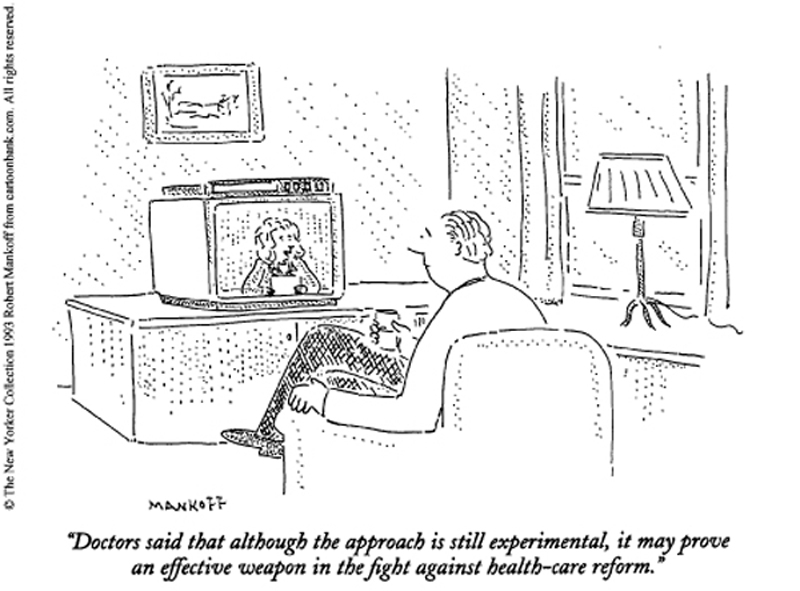
Don’t Walk Away From Health Care Reform!
The Center for Medicare Advocacy supports efforts to pass the Senate’s health reform bill. We reiterate what President Obama asked of Congress in his State of the Union address, “don’t walk away from [health] reform!” Paul Krugman agreed in his NewYork Times editorial.
Now is not the time to retreat, or to insist that the perfect defeat the good. Too many people have no health insurance, too many are denied coverage because of preexisting conditions, too many face bankruptcy because of uncovered medical bills for us to give up.
What would Ted Kennedy do? He would agree! He would push forward to pass the Senate health reform bill. As he writes in his memoir about his efforts to pass reform – in 1977:
“My staff and I worked hard to craft a plan that would be capable of having broad-based support. Specifically, we negotiated long and hard in 1977 to persuade .. the AFL-CIO and … the UAW, to compromise on their strong commitment to a single-payer system, where health care providers would be paid from a single national fund like Medicare – and agree instead to support a plan built on our existing system of private insurance provided that coverage was mandatory and universal. I had personally supported single payer in the past and understood the benefits of it, but I also knew that it would be politically impossible to pass.” True Compass, p. 359 (2009)
Listen to Teddy! Pass the Senate health care reform bill as soon as possible – if that’s what can be done, if that’s what’s feasible – do it!
To speak to your members of Congress, call (800)828-0498.

 CMA Health Policy Blog