Posts tagged ‘Private Plans’
What is a Quality Medicare Advantage Health Plan?
It’s open enrollment season again, and Medicare beneficiaries and their families are barraged with mail, TV and radio commercials, and print ads describing the Medicare Advantage and prescription drug plan (PDP) options in their area. This year, Congress and Medicare would like people to consider the quality ratings of plans when making their choice for 2011. Beneficiaries can find quality information about plans on the Medicare Plan Finder tool. Plans are evaluated on a 5-star rating system that looks at medical care as well as customer relations, including complying with CMS rules about marketing and about appeals.
Quality ratings are so important that the new health reform law, the Affordable Care Act, awards quality bonuses, starting in 2012, to all Medicare Advantage plans if they score at least 4 out of 5 stars on the Medicare 5-star rating system. Quality ratings are so important that CMS, the Medicare agency, even moved up the starting date of and expanded eligibility for the quality bonus payments to Medicare Advantage plans. In fact, Medicare has created a demonstration project for 2011 that will give Medicare Advantage plans a bonus payment if they achieve 3 out of 5 stars on the star system.
But what does it mean to be rated “a high-quality Medicare Advantage Health Plan?”
Ask Arcadian Health Plans, a parent company that has been in existence since 1997, and that offers Medicare Advantage plans in 15 states. On November 17th Arcadian sent out press releases to many of the communities in which they offer Medicare Advantage plans to announce that they had been awarded the 2011 Senior Choice Gold Award by HealthMetrix Research “for excellent value among Medicare Advantage plans.” See, e.g., Southeast Community Care’s Medicare Advantage Part D Plan is Rated the #1 Value for Medicare Beneficiaries in the Roanoke Area, http://www.prnewswire.com/news-releases/southeast-community-cares-medicare-advantage-part-d-plan-is-rated-the-1-value-for-medicare-beneficiaries-in-the-roanoke-area-108768449.html; Texas’ Community Care’s Medicare Advantage Part D Plan Is Rated the #1 Value for Medicare Beneficiaries http://pr-usa.net/index.php?option=com_content&task=view&id=540001&Itemi.
Yet, two days later, on November 19th, CMS announced it was sanctioning Arcadian Health Plans and two other health plan sponsors and not allowing them to market or enroll new beneficiaries. Arcadian is being sanctioned for violations in marketing the plans they offer to beneficiaries. For example, Arcadian has given beneficiaries incorrect information about whether their doctor is in the plan network or whether their prescription is on the plan’s formulary. Arcadian plan agents may even have enrolled people into health plans who had not consented to, let alone known about, the enrollment. And, according to the letter CMS sent to the plan, CMS has been looking at Arcadian’s marketing activities since 2008.
See, http://op.bna.com/hl.nsf/id/bbrk-8bcule/$File/Arcadian%20Sanctions%20Letter.pdf.
If CMS is going to suggest that beneficiaries consider enrolling in particular, “highly-rated,” Medicare Advantage plans or PDPs because of the quality of coverage and services they provide, and if these plans are going to get extra bonus payments, we need to be clear about what a high quality plan is – and is not!
Perhaps Arcadian’s press releases are another example of marketing violations that should be investigated by CMS.
Fool Me Once…
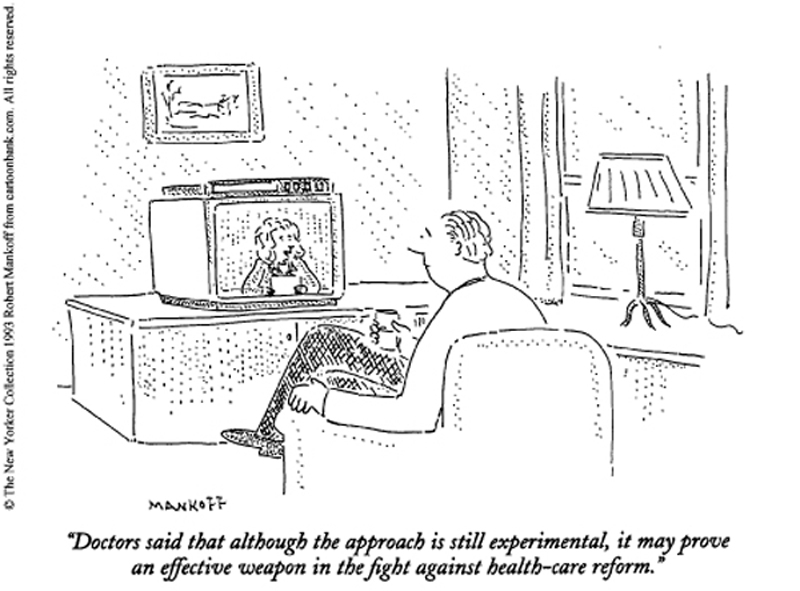
Newt Gingrich, staunch supporter of Medicare? That’s why he’s opposed to health care reform? If you read just the opening paragraph of Paul Krugman’s February 12, 2010 Op-Ed article, you might believe this. Well, you might believe it if you haven’t been paying attention to anything Gingrich and his fellow conservatives have been doing for the last couple of decades.
Gingrich himself is the man who enthusiastically declared in 1995, as Republicans pushed for Draconian cuts to the Medicare program, that Medicare would thus “wither on the vine.”
Yet, here we are 15 years later, and Mr. Gingrich is crying, according to Krugman, that “the reform bills passed by the House and Senate cut Medicare by approximately $500 billion. This is wrong.”
No, Mr. Gingrich, what’s wrong is the gall of hypocrites who will grasp any tactic to frighten people and fight the real health care reform our country so desperately needs.
Private Medicare Plans Are Taking You to the Cleaners. Cut the Subsidies Now! And Don’t Repeat This Windfall in Health Care Reform.
| New Report Highlights Medicare Advantage Insurers’ Higher Administrative Spending | |
| Publications | |
| Wednesday, 09 December 2009 11:51 | |
| Today Energy and Commerce Committee Chairman Henry A. Waxman and Oversight and Investigations Subcommittee Chairman Bart Stupak released a new report which found that 34 Medicare Advantage insurers expend significant sums on profits, marketing, and other corporate expenses. Last year, the insurers spent an average of $1,450 per beneficiary on profits, marketing, and other corporate expenses, nearly ten times as much as traditional Medicare spent on administrative expenses per beneficiary.On average, Medicare Advantage insurers spent over 15% of premium revenue on profits, marketing, and other corporate expenses. Two-thirds of the Medicare Advantage insurers surveyed by the Committee had a “medical loss ratio” – the percentage of premium revenues used to pay medical claims – below 85% during at least one of the four years examined. In contrast, traditional Medicare spends 98% of its money on medical care. If all Medicare Advantage plans had spent at least 85% of their premium dollars on medical care from 2005 to 2008, they would have spent an additional $3 billion on medical care for seniors.”Medicare plays a critically important role in insuring that millions of Americans receive the health care they need,” said Rep. Waxman. “But as this report shows, Medicare Advantage insurers are squandering billions of dollars on overhead costs – in fact, they spend ten times the amount per beneficiary as traditional Medicare. Our health care bill includes much needed reforms to the Medicare Advantage payment system. There is no reason for Medicare to pay private insurers more than traditional Medicare pays in any community in the country. That will insure that taxpayer dollars are spent wisely.””Medicare Advantage was never intended to be a program for insurance companies to pad their corporate expense accounts,” said Rep. Stupak. “Seniors pay Medicare Advantage premiums with the expectation that the money will be used to provide critical medical care – not pay for marketing campaigns and executive bonuses. The disparity between the percentage of premiums used to pay medical claims in traditional Medicare and Medicare Advantage is unacceptable; our seniors deserve better. This report is just the latest example of private insurance companies exploiting the Medicare Advantage system for their own gain.”At the request of Chairman Waxman and Subcommittee Chairman Stupak, the majority Committee staff analyzed premium revenues, medical claim payments, marketing costs, profits, and other data from 34 major Medicare Advantage insurers.
The report found:
|
|
What’s Wrong With This Picture?
Congress Finds Tobacco Causes Serious Illness And Death. New England Journal Of Medicine Finds Health Insurance Industry Has Large Tobacco Stock Holdings.
The Family Smoking Prevention and Tobacco Act (H.R. 1256ENR) passed both houses of Congress and is awaiting the President’s signature. In that bill, Congress made the following findings:
- “Tobacco use is the foremost cause of premature death in America. It causes over 400,000 deaths in the United States each year, and approximately 8,600,000 Americans have chronic illnesses related to smoking.” H.R.1256 ENR §2(13)
- “The use of tobacco products by the Nation’s children is a pediatric disease of considerable proportions that results in new generations of tobacco-dependent children and adults.” H.R.1256 ENR §2(1)
- “A consensus exists that tobacco products are inherently dangerous and cause cancer, heart disease and other serious adverse health effects.” H.R.1256 ENR §2(2)
- “Nicotine is an addictive drug.” H.R.1256ENR §2(3)
- “Tobacco dependence is a chronic disease, one that typically requires repeated interventions to achieve long-term or permanent abstinence.” H.R. 1256 ENR §2(33)
So, why do health insurance companies, the very companies that Congress wants to run health care reform, have major holdings in tobacco companies?
A recent report in a letter to the New England Journal of Medicine (“Insurance-Industry Investments in Tobacco,” N Engl J Med 360:23, June 4, 2009, at 2483-2484) perhaps provides the answer:
“Insurance firms, like any business, are driven by profit and this fact compromises any health care plan that includes them…..Although investing in tobacco while selling life or health insurance may seem self-defeating, insurance firms have figured out ways to profit from both. Insurers exclude smokers from coverage, or more commonly, charge them higher premiums. Insurers profit … twice over.” (Id.)
According to this recent report, U.S. based Prudential Financial (which provides life and long-term disability insurance) owns tobacco holdings of $264.3 million; U.K. based Prudential (which provides health, life and long-term disability insurance) has a stake in tobacco totaling $1.38 billion; Standard Life (which offers health and life insurance) owns nearly $950 million of tobacco stock; Canada based Sun Life, which offers health, life, disability and long term care insurance owns just over $1 billion of tobacco stock. Northwest Mutual and MassMutual (both of which offer life, disability and long-term care insurance) respectively own more than $235 million and $585 million of tobacco stock. (Id.).
As the writers to the New England Journal of Medicine remarked, “[T]hese data are a reminder of the true priority of the insurance industry, which is making money, not ensuring health and well-being.” (Id.)
Are these really the companies we want running our new health care reform program?
A New Day Dawns for Oversight of Private Medicare Plans
With the advent of the Obama Administration, we have seen a new philosophy towards the private insurance plans that contract with Medicare under the Medicare Part C (Medicare Advantage) and Medicare Part D (prescription drug) programs.
No longer will the Medicare agency “partner” with the Medicare Advantage and prescription drug plans “to design and provide a variety of high quality health care products…..” as the agency said in 2009. This Administration is not about partnering with the private entities that it pays to provide health coverage to Medicare beneficiaries. Instead, Medicare will be looking closely at how these plans operate and what they do with the billions of federal dollars they receive. For example:
• Medicare has told current and potential Part C and Part D plan sponsors that it will no longer accept (during the application process for 2010) the incomplete applications, blank documents and spread sheets, and late filings that it has accepted in past years.
• Medicare announced that it is reducing Medicare Advantage payments for 2010 to account for “up-coding” by Medicare Advantage plans. Plans “up-code” the disease codes for their enrollees, i.e., claim that their enrollees have gotten sicker, in order to receive higher payments. The problem is that the private Medicare Advantage plans claimed an increase that was actually greater than the increase for the Medicare population.
• The President’s budget, released today, May 7, 2009, includes a focus on private Medicare plans and additional funding for greater oversight of the Medicare Advantage and Medicare prescription drug plans, as part of the overall effort to reduce fraud, waste and abuse in the federal government.
These changes are good for the fiscal integrity of the Medicare program, for the older people and people with disabilities who are served by the program, and for all Americans. What a breath of fresh air.
From the Desk of Judith Stein….
Update: Real reform still possible
Apparently the President will support use of the Senate “Reconciliation” process to move health care reform if the super-majority of 60 votes needed to avoid a filibuster can’t be garnered to pass a good plan. We heard this last week from a senior senator – he hoped a bipartisan vote would be possible, but indicated that certain principles need to be met by any health care bill, and that Reconciliation would be considered if those principles would otherwise be sacrificed. Amen to that.
Let’s not accept “something’s better than nothing” again! That mantra helped pass the 2003 law that gave us private Medicare Advantage, Part D, and windfalls for corporations – at the expense of Medicare participants and taxpayers. Been there, done that. This time we need a good plan with a solid public option that puts people above profits.
___
April 24th
CMA Health Policy Consultants’ contacts in DC indicate that a public option in health care reform is in jeopardy. Is it possible that after all the problems Medicare has had with private plans, and the plans’ exorbitant additional costs, that we will actually let corporate greed trump the interests of sick people and taxpayers once again?

 CMA Health Policy Blog