Author Archive
Center for Medicare Advocacy Recommended as Top-10 Caregiver Resource
Jane Gross, creator of The New York Times‘ “New Old Age” blog, recently highlighted the Center for Medicare Advocacy as a top 10 resource for caregivers in an appearance on “Krista Tippet On Being” on NPR. The episode, entitled “The Far Shore of Aging” is garnering an overwhelming response from listeners. See the complete list of resources, and listen to the full show, at http://being.publicradio.org/programs/2011/far-shore-of-aging/gross_topten.shtml.
Lower Medicare Age
Lawmakers continue to talk about the future of Medicare as they address the federal deficit, and many of the proposals that have emerged would have horrible repercussions for Medicare beneficiaries and their families. Just last week, Connecticut’s Senator Joe Lieberman suggested raising the eligibility age for Medicare; an unsound idea that would hurt the actuarial balance of the Medicare risk pool. Raising the eligibility age would increase the proportion of older, sicker people in Medicare, while younger, healthier people – and their largely unused premiums – would be excluded. That’s the exact wrong direction, and we at the Center had to respond.
Follow the links below to see our letters in the New York Times and the Washington Post.
http://www.nytimes.com/2011/06/16/opinion/l16krugman.html?_r=2&partner=rssnyt&emc=rss
So – What Would You Do? Real Solutions for Medicare Solvency and Reducing the Deficit
As lawmakers debate the future of Medicare as part of broader efforts to address the federal deficit, proposals have emerged from Congress that would have severe repercussions for beneficiaries and their families.[1] Sound and measured solutions that would protect Medicare coverage while reducing costs to taxpayers have not been seriously addressed. The six solutions we propose would accomplish both of these goals.
These solutions, unlike current proposals, do not shift costs to beneficiaries or completely restructure theMedicare program. They promote choice and competition while shoring up the solvency ofMedicare. Adopting these solutions would be a responsible step in reducing our deficit the right way.
1. Negotiate Drug Prices with Pharmaceutical Companies
The Medicare prescription drug law passed in 2003 prohibits the Secretary of Health and Human Services from negotiating prices with pharmaceutical companies. These companies gained 44 million customers when Medicare began covering prescription drugs, but they did not have to adjust their prices in return. Requiring the Secretary to negotiate drug prices for Medicare would save taxpayers billions of dollars – potentially over $200 billion over ten years.[2] Taxpayers currently pay nearly 70% more for drugs in the Medicare program than through the Veteran’s Administration, which has direct negotiating power.[3] Savings realized from reducingMedicare drug cuts could be used to improve benefits for beneficiaries and reduce the deficit.
2. Stop Paying Private Medicare Plans Anything More Than Traditional Medicare
According to the Medicare Payment Advisory Commission (MedPAC), Medicare pays, on average, 10% more for beneficiaries enrolled in private insurance (Medicare Advantage or MA plans) than for comparable beneficiaries enrolled in traditional Medicare.[4] Despite these extra payments, beneficiaries in private plans who are in poor health, or who have chronic conditions, often have more limitations on coverage than they would under traditional Medicare.[5]
A large portion of the overpayments made to private plans actually goes to insurers rather than to benefit Medicare beneficiaries.[6] Although the Affordable Care Act (ACA) changed the payment formula forMedicare Advantage plans, some plans will continue to be paid as much as 115% of the average traditionalMedicare payment rate for their county when the new rates are fully implemented. MedPAC estimates that by 2017Medicare Advantage payment benchmarks will average 101% of traditionalMedicare. ACA also provides additional payments for plans that receive high quality ratings, increasing the likelihood that some MA plans will continue to be paid more than under traditionalMedicare. Reducing private MA payments to 100% of traditionalMedicare, as MedPAC proposed before the enactment of ACA, will increase the solvency of theMedicare program and curb costs for taxpayers. Private plans simply should not receive higher pay than traditionalMedicare.
3. Include a Drug Benefit in Traditional Medicare
Offering a drug benefit in traditional Medicare would give beneficiaries a choice they do not now have, encourage people to stay in traditional Medicare, and save money for taxpayers. It would also provide an alternative to unchecked private plans that leave many with unexpected high out-of-pocket costs. A drug benefit in traditional Medicare would protect beneficiaries against expensive and sometimes abusive marketing practices. Further, traditional Medicare’s lower administrative costs could free up money for quality care, would result in lower drug prices for beneficiaries, and save taxpayers over $20 billion a year.[7]
4. Extend Medicaid Drug Rebates to Medicare Dual Eligibles
Dual eligibles (people eligible for both Medicare and Medicaid) comprise one-fourth of all Medicare drug users, and are among the most costly beneficiaries. Because Medicare, rather than Medicaid, covers most of their drugs and because Medicare cannot negotiate drug prices, their drugs are not eligible for the same rebates as they would be under the traditional Medicaid program. Extending these rebates for dual eligibles would save at least $30 billion over ten years.[8]
5. Lower the Age of Medicare Eligibility
People between 55 and 65 who are not disabled are currently unable to enroll in Medicare. Lowering the age of eligibility to allow this healthier population to enroll in the Medicare program would add revenue for people who will likely need less care and fewer services than older and disabled enrollees.
6. Let the Affordable Care Act Do Its Job
The Affordable Care Act includes many measures to control costs as well as models for reform that will increase the solvency of the Medicare program and lower the deficit while protecting Medicare’s guaranteed benefits. The Congressional Budget Office estimates that repealing or defunding ACA would add $230 billion to the deficit while ignoring the real issue of rising overall health care costs, which contribute heavily to the growing national debt. ACA includes strong measures to allow CMS to combat fraud, waste, and abuse that will bring down costs, as well as a variety of pilot and demonstration projects that aim to bring better care and quality to beneficiaries.[9] The bipartisan Bowles-Simpson Deficit Commission recommended that these projects be implemented as quickly as possible.[10] Allowing ACA to do its job will create a foundation on which to build by improving care and holding down costs for taxpayers.
Conclusion
Protecting”Medicare by shifting costs from the federal government to beneficiaries and their families – whether through the creation of a voucher program or through measures that would be required by spending caps – is a perversion of Medicare’s original purpose, which was to protect older people and their families from illness and financial ruin due to health care costs. The solutions proposed by the Center forMedicare Advocacy promote financial solvency without doing it at the expense of beneficiaries.
[1]See previous Alerts from the Center, “Why Medicaid Matters to Medicare Beneficiaries and Their Families”, “What Happens to Current Nursing Home Residents if House Budget Resolution Becomes Law?”
[2]National Committee to Preserve Social Security and Medicare, available at http://www.ncpssm.org/pdf/price_negotiation_part_d.pdf
[3]Center for Economic and Policy Research, “Negotiating Prices with Drug Companies Could Save Medicare $30 Billion”, March 2007, available at http://www.cepr.net/index.php/press-releases/press-releases/negotiating-prices-with-drug-companies-could-save-medicare-30-billion.
[4]MedPAC, Report to the Congress, March 2011, Chapter 12 (March 2011), available at http://www.medpac.gov/documents/Mar11_EntireReport.pdf.
[5] Neuman P. Medicare Advantage: Key Issues and Implications for Beneficiaries. Testimony before the House Committee on the Budget, United States House of Representatives, June 28, 2007, available at http://www.allhealth.org/briefingmaterials/NeumanTestimony-830.pdf,
[6] Medicare Payment Advisory Commission. March 2009 Report to Congress, Chapter 3: The Medicare Advantage Program. P. 251-253, available at http://www.medpac.gov/chapters/Mar09_Ch03.pdf.
[7]Senator Dick Durbin, available at http://durbin.senate.gov/public/index.cfm/pressreleases?ID=555cc1e8-cc54-4ead-9d85-d5e6275b3789.
[8]Congressional Budget Office, Letter to Honorable Charles Rangel, available at http://www.cbo.gov/ftpdocs/104xx/doc10464/hr3200.pdf
[9]See previous Alert from the Center, “Combating Fraud, Waste, and Abuse in Health Care.”
[10]The National Commission on Fiscal Responsibility and Reform, “The Moment of Truth,” December 2010.
We Told You So…
The New York Times recently printed an article by Robert Pear entitled “Medicare Standards are Too Strict, 2 Courts Find.”
We’ve been telling people that for years.
The Times article refers to two decisions, Anderson v. Sebelius and Papciak v. Sebelius, both regarding the Medicare “Improvement Standard.” For anyone not familiar, this is an arbitrary rule of thumb which essentially says that if the beneficiary won’t improve, Medicare won’t cover certain services.
The Improvement Standard has been used for years by Medicare contractors to improperly deny coverage.
However, per these two recent decisions, Medicare must adhere to the law as written, and pay for services if they are needed to maintain a person’s condition or to prevent deterioration of the person’s condition. The courts stated that Medicare beneficiaries do not have to prove that their condition will improve, as the government generally contends.
The rulings are potentially significant for many people with chronic conditions and disabilities like multiple sclerosis and Alzheimer’s disease; conditions which, by their very nature, simply will not improve. In the words of one judge, patients “need not risk a deterioration of [their] fragile health” to justify continuation of coverage for skilled care.
Center for Medicare Advocacy Director of litigation Gill Deford acted as co-counsel in one of the two cases. The Center has launched a campaign to end the Improvement Standard, and these decisions represent a significant victory.
Health Reform Hits Main Street
Confused about how the new health reform law really works? This short, animated movie, written and produced by the Kaiser Family Foundation and narrated by Cokie Roberts, explains the problems with the current health care system, the changes that are happening now, and the big changes coming in 2014.
You’re not in the hospital. You’re in observation!
When Mrs. Lee Barrows was told that her husband Larry, whom she’d been visiting in the hospital for a week was not an in-patient, she asked, then “Who the hell have I been visiting?” This scene in Connecticut is being repeated daily in acute care hospitals all over the country. Medicare beneficiaries – although placed in hospital beds (often, from the emergency room) and given medications, tests, therapies, medical and nursing services, food, and a wrist-band – are told they aren’t in-patients; they’re just receiving observation services as outpatients. Patients often learn about their out-patient status just as they are leaving the hospital for the skilled nursing facility – which won’t be covered by the Medicare program because they weren’t in-patients for three consecutive days!
The Center for Medicare Advocacy has been hearing this story with increasing frequency over the last year. We’ve been writing about it (see our 5/24 post), and now, the media is reporting on it.
Bloomberg News published an article by Drew Armstrong on its website and in Business Week – “Medicare Fraud Effort Gives Elderly Surprise Hospital Bills” (July 12, 2010), http://www.bloomberg.com/news/print/2010-07-12/hospital-fraud-audits-spur-unintended-cash-penalty-to-elderly-on-medicare.html
The Philadelphia Inquirer also addressed this pressing issue in its article “High cost, rigorous rules can trap Medicare patients” (July 4, 2010), http://www.philly.com/inquirer/health_science/daily/20100704_High_cost__rigorous_rules_can_trap_Medicare_patients.html
The Center has lots of information on this issue. Please go to http://www.medicareadvocacy.org/InfoByTopic/ObservationStatus/ObservationMain.htm
And let us hear from you, too! What is happening to you and your friends and relatives in the hospital?
Seize The Day!
The Center for Medicare Advocacy urges Congress to pass health care reform now. According to Judith Stein, the Center’s Executive Director “We are the closest we have ever been to fixing our unfair and ineffective health care system. We must seize this opportunity to pass health reform. The status quo is not an option; we simply can’t afford to put this off yet again.”
Ms. Stein stressed that health care reform will strengthen and improve guaranteed benefits in Medicare and protect the integrity of the Medicare program by extending the life of the Medicare Trust Fund. “More specifically, health care reform will improve the Medicare program for beneficiaries by slowing the growth of premiums and other out-of-pocket expenses, improving preventive benefits, and closing the gap in prescription drug coverage,” said Ms. Stein.
Moreover, the legislation promotes delivery system reforms to encourage high quality, coordinated health care. “Most of the Center’s clients have chronic conditions – as do nearly all Medicare beneficiaries. We know from experience that well coordinated care is critical to our clients’ well-being. The Center has been advocating about this issue for many years,” said Ms. Stein.
Ms. Stein stated that the Center for Medicare Advocacy strongly supports the goals of comprehensive health reform legislation, which expands coverage to millions of Americans, helps them purchase insurance, and ends discriminatory practices by insurance companies. “Everyone wins, including Medicare beneficiaries when all Americans have access to quality, affordable health care,” she said.
The Center for Medicare Advocacy urges Congress to pass health reform now. Passing this legislation will strengthen Medicare, bring a similar promise of health coverage to younger people, and increase the economic security of all Americans.
Judith Stein is available for comment and questions.
Extend the Life of Medicare: Pass Health Care Reform Now
If you have Medicare and want to keep it, you should be in favor of health care reform.
Recently the non-partisan Medicare Advisory Payment Commission (MedPAC) released its biannual report to Congress, which for the fifth consecutive year advised Congress to equalize reimbursements to Medicare Advantage plans with the traditional Medicare fee-for-service program.
According to non-partisan Congressional Budget Office (CBO) estimates, equalizing payments between Medicare Advantage programs and the traditional Medicare programs will generate $170 billion in savings over the next ten years.
MedPAC’s report concluded that the “Commission has consistently supported the concept of financial neutrality between payment rates for the fee-for-service program and private plans.” Under the current reimbursement system, Medicare Advantage plans are reimbursed on average 14 percent more than traditional Medicare plans. These extra costs are born by beneficiaries in the traditional Medicare program and all taxpayers.
The health care reform bills passed by both the House and the Senate, and the proposals by President Obama, would reduce wasteful Medicare Advantage spending – saving money for Medicare beneficiaries and taxpayers alike, and extending the solvency of the Medicare program. We urge Congress to pass health care reform now!
Fool Me Once…
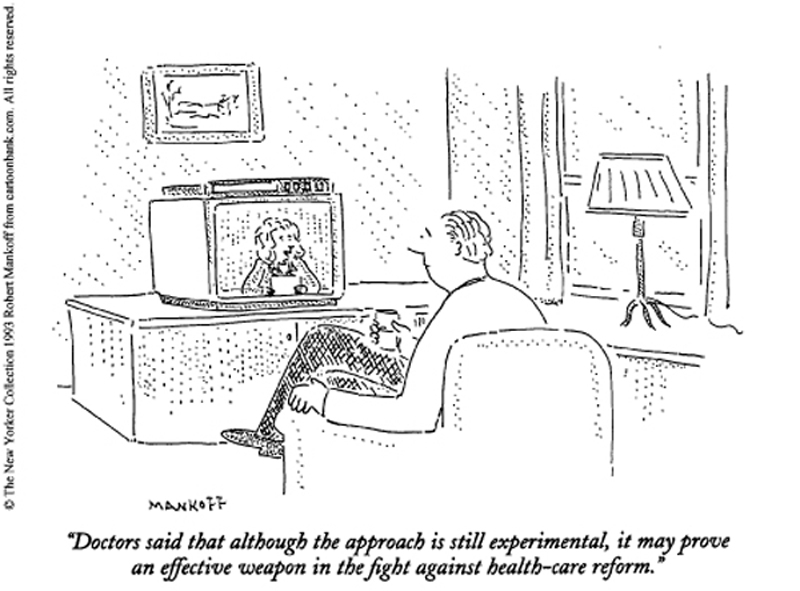
Newt Gingrich, staunch supporter of Medicare? That’s why he’s opposed to health care reform? If you read just the opening paragraph of Paul Krugman’s February 12, 2010 Op-Ed article, you might believe this. Well, you might believe it if you haven’t been paying attention to anything Gingrich and his fellow conservatives have been doing for the last couple of decades.
Gingrich himself is the man who enthusiastically declared in 1995, as Republicans pushed for Draconian cuts to the Medicare program, that Medicare would thus “wither on the vine.”
Yet, here we are 15 years later, and Mr. Gingrich is crying, according to Krugman, that “the reform bills passed by the House and Senate cut Medicare by approximately $500 billion. This is wrong.”
No, Mr. Gingrich, what’s wrong is the gall of hypocrites who will grasp any tactic to frighten people and fight the real health care reform our country so desperately needs.
Senators: Listen to US Economist and Nobel Laureate
Like we’ve been saying, if you care about fiscal responsibility and the future of Medicare, support health care reform! Paul Krugman explains why in today’s New York Times.

 CMA Health Policy Blog